The Problem
James Okonkwo's fintech SaaS platform was processing real transactions and solving a genuine problem in the Nigerian SME market. The underlying product was solid, but 60% of new users were dropping off in the first week. The NPS was 24. Reviews consistently mentioned confusion, not functionality.
The platform had been built by engineers, for engineers. Features were comprehensive. The interface communicated almost none of it to a first-time user. The onboarding flow assumed knowledge users didn't have. The dashboard surfaced everything at once, leaving users overwhelmed rather than guided.
The product was right. The interface was wrong.
The Discovery Process
We spent the first two weeks doing a structured UX audit by watching session recordings, interviewing churned users, mapping the existing information architecture, and identifying every point where users were leaving or stalling.
Three critical failure points emerged
The onboarding flow had seven steps before a user could complete their first transaction. Most gave up at step four.
The dashboard surfaced 14 data points on load. Users with no financial reporting background had no idea what to prioritise.
Error messages were technical strings rather than plain-language guidance. Users who hit errors didn't know how to proceed.
The Redesign
We rebuilt three core areas: onboarding, the main dashboard, and the transaction flow.
Reduced to three steps. Progressive disclosure: only show users what they need to complete each step. Clear progress indicators. Value statement at each step explaining why it mattered.
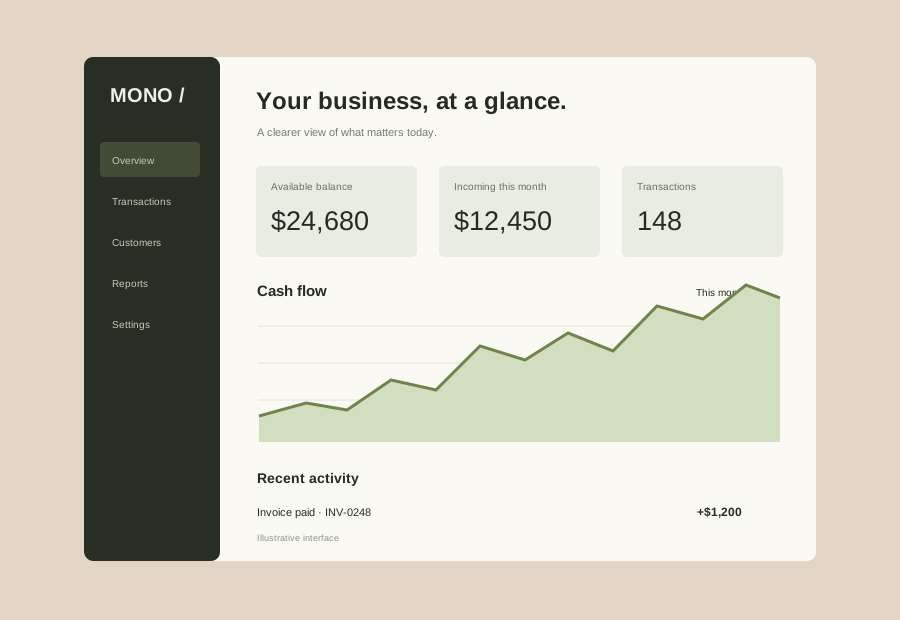
Introduced a "focus view" that surfaced three key metrics based on the user's most recent activity. Power users could access the full data set, but new users landed somewhere comprehensible.
Clearer input labels, contextual help text, plain-language error messages, and a confirmation screen that summarised the transaction before submission.
Every decision was tested with a prototype before any development began. We ran two rounds of user testing with target users (SME owners with limited accounting background) before handing off the final specs.
"Retention jumped 55% within two months and our NPS went from 24 to 61. That changed our fundraising conversation."
The Outcome
Within 60 days of the redesigned product going live, week-one retention had improved significantly. The NPS moved from 24 to 61. Support ticket volume related to onboarding dropped by over 40%.
The most meaningful result, per James: "That changed our fundraising conversation." A product with a 61 NPS is a fundamentally different pitch to investors than a product at 24.